God knows I never sought anything in you except yourself… the name of wife may seem more sacred or more binding, but sweeter for me will always be the word friend. From the Letters of Abelard and Heloise (trans. Betty Radice)
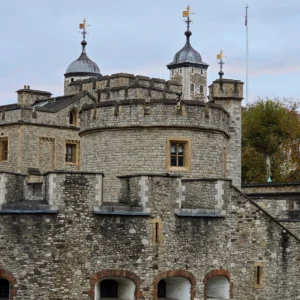
A fugue on both our houses to know we inhabit these different worlds counterpointed, in contrasting modes. Yours, warmth and colour and light and enchantment; mine, icy winds and ruins rising from a winter’s loam whose cadences are minor.
Different worlds. Yet both of us so exercised by the same preoccupations: longing, nostalgia, grief… saudade… I think back to those chest tombs upon which sit effigies of the deceased in diverse postures either of supplication or repose, and those elaborately lettered epitaphs upon which you walk towards the sanctuary/not sanctuary. Just beyond my window is the old Saxon burial ground, now the Cathedral Green. They are still with us, the dead.
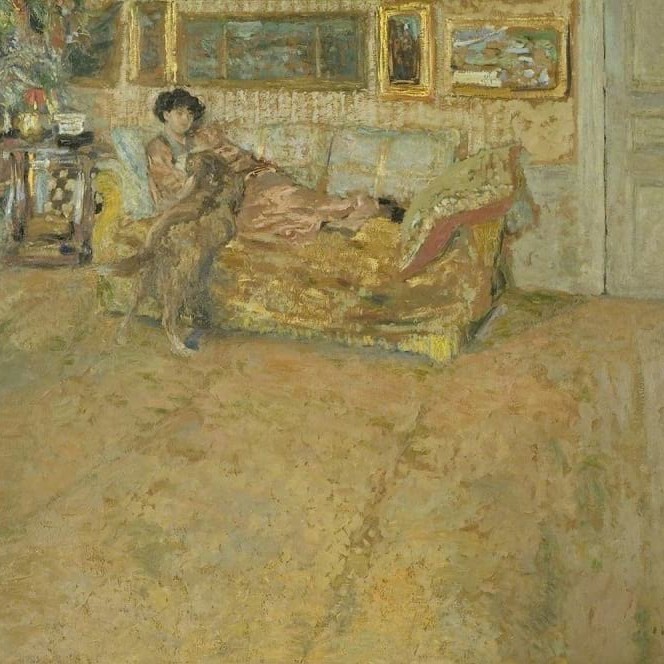
Bristol. Vuillard has followed me here from Paris, among the Pre-Raphaelites but also Auerbach and Lanyon… the woman rests on a chaise longue, singing in distemper, spleen.
And the slender, embellished gold fittings torn from sword hilts, among the Staffordshire Hoard, mostly damaged, fragmentary pieces which would have been stripped from the weapons of the vanquished and buried for safekeeping by some warrior-king who met his end before he could retrieve them.
The act of twisting these fittings off the hilts imposes an erotic torsion on these inert pieces of gold which summons back the violent energy of those who lived and fought and died. It has delivered them up to modernity, immortality.
My head is spinning after dipping into Kate Zambreno’s Heroines. It is dazzlingly literate and fierce, frank, angry. Never read anything like it. Ernaux maybe? “Where is it supposed to go,” writes Zambreno. “All of this fury? A woman’s anger: it must be contained, repressed, diffused. Maybe Emma Bovary is pissed off. So instead of destroying something (not permissible) she sets off to systematically self-destruct. Or to live more intensely. Or perhaps those are the same things.”
Look for the counterpoint. I meditate on a Hammershøi, an interior brimming with stillness and silence, a seated woman, her back to us, the nape of her neck white like an ukiyo-e maiko’s, reading or writing or sewing, it’s hard to tell which, the light coming in from a window on the right and raking across the wall to take in an oval mirror, the palette creamy blue-greys and tangy ochres. Hegel wrote that genuine works of art capture the essence of life and freedom; they go beyond naturalistic depictions to embody human expression and vitality.
But is it enough? We say we want peace, we want equanimity, all the while praying for the turbulence of passion to throw us off course. We marry Apollo but lust after Dionysus. One minute I’m an altar boy at St Patrick’s, fervent in my belief, swinging the censer from which pours fragrant incense; the next, I’m the same boy standing naked behind the garden shed, languidly smoking a cigarette stolen from my father, delighting in my bourgeoning sexuality.
As Mrs. Dalloway observes, “For the truth is (let her ignore it) that human beings have neither kindness, nor faith, nor charity beyond what serves to increase the pleasure of the moment.”
What else is a painting but the pleasure of the moment, frozen in time?
Art proliferates like little Shivas, sustaining and destroying us. Like the archaic torso of Apollo in Rilke’s poem, we accept that “For here there is no place/that does not see you. You must change your life.”
For me the two most important cards in the major arcana of the Tarot are the Fool and Death. The Fool represents youth and vulnerability, untouched by life’s challenges and unaware of his own potential. In a Tarot reading, he urges you to adopt his open, eager spirit and face the future without fear. The Death card does not signify physical death but symbolises cycles and transformation. It reminds us that clinging to the past prevents new opportunities. Each ending carries the promise of a new beginning.
Chopin’s Nocturne in C Minor, Op. 48 No.1. The opening A section is both languid, sensual dance and funeral dirge. The major-key B section is bright but disturbing, intrusive; it becomes more insistent before nearly self-destructing in a thundering maelstrom of descending chromatic octaves. The return of the A section finds it transformed into something more urgent, more troubled, more passionate and tragic than before.
It’s like a doomed, reckless love affair which tears you apart but which, as you reassemble yourself, is itself rewritten by the language of the heart, transfigured into something richer and stranger.
Machaut is more fin’amor. Nothing wrong with that.