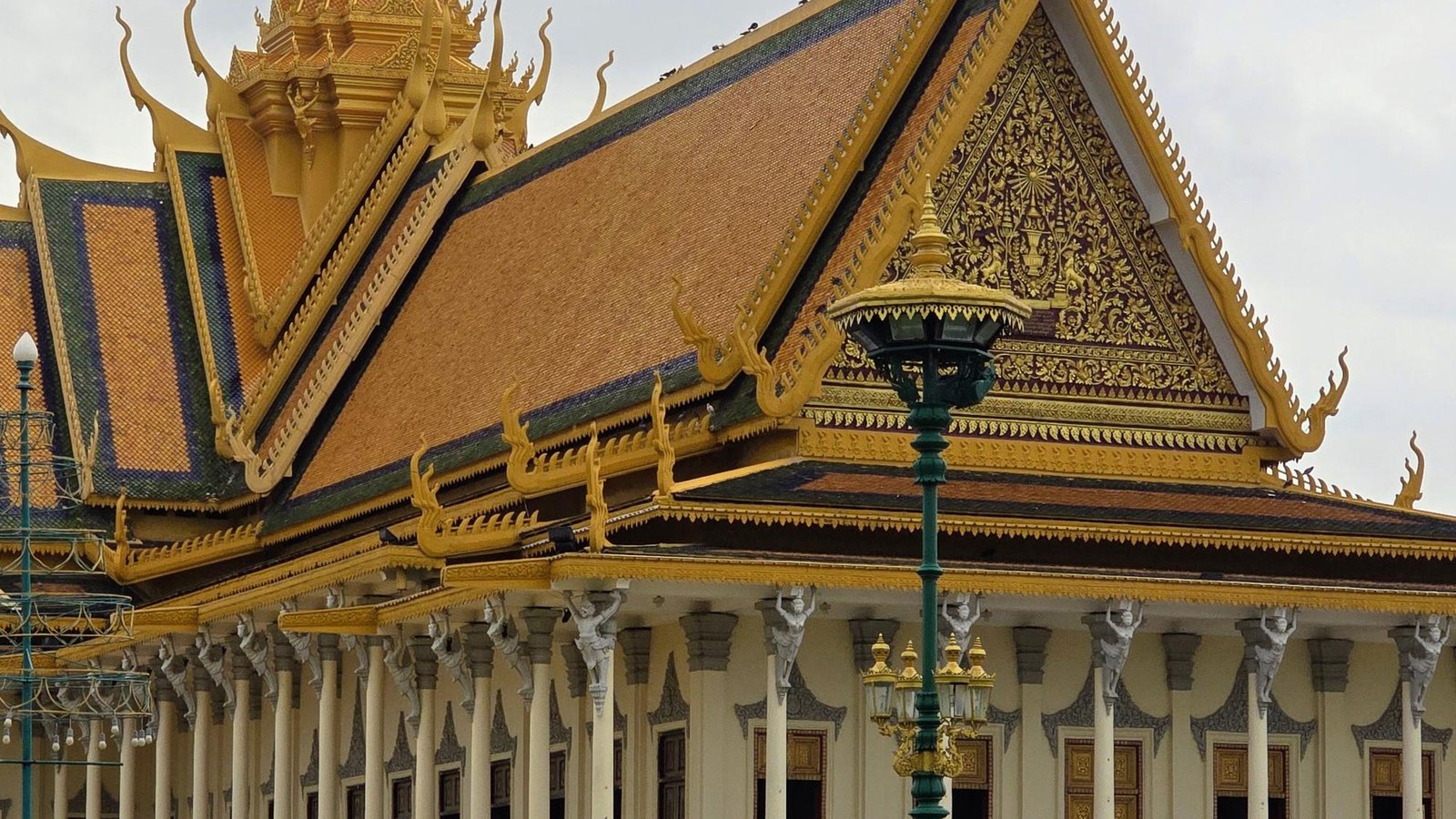
The Royal Palace. Picture: Will Yeoman
The heavens have kindly opened up just in time for our cyclo ride through the streets of Cambodia’s capital, Phnom Penh.
Local guide Buntha — a former Buddhist monk and Killing Fields survivor — says it’s a blessing.
I agree.
These colonial-era pedal-powered rickshaws with a bucket-seat upfront may be an outmoded form of transport today, but they ensure total immersion amid the city’s hustle and bustle. The relentless, heavy rain just serves to bind you even more to raucous streets and elegant boulevards alike — a metaphysical glue.
Earlier, we’d had a much shorter, drier cyclo ride from the docked river cruise ship Viking Tonle (Phnom Penh is at the confluence of the Mekong, Tonle Sap and Bassac rivers) to see the magnificent Royal Palace and Silver Pagoda (Wat Preah Keo).
Where the former is the King of Cambodia’s official residence, the latter is a royal temple whose name derives from its floor tiled with solid silver. Both lie within a big Khmer and French colonial complex.
As Mr Buntha leads us around ornate stupas, orange-clad monks and cats of many colours enliven our walk as much as the extraordinary frescos, gilded décor and historic artefacts do our visits indoors.
In the Silver Pagoda, I watch as pilgrims kneel or bow before the famous diamond-studded Emerald Buddha. The Throne Hall (Preah Thineang Dheva Vinnichhay), which we can only view from outside, has its own radiating power.
The afternoon brings us face to face with Phnom Penh’s darker past.