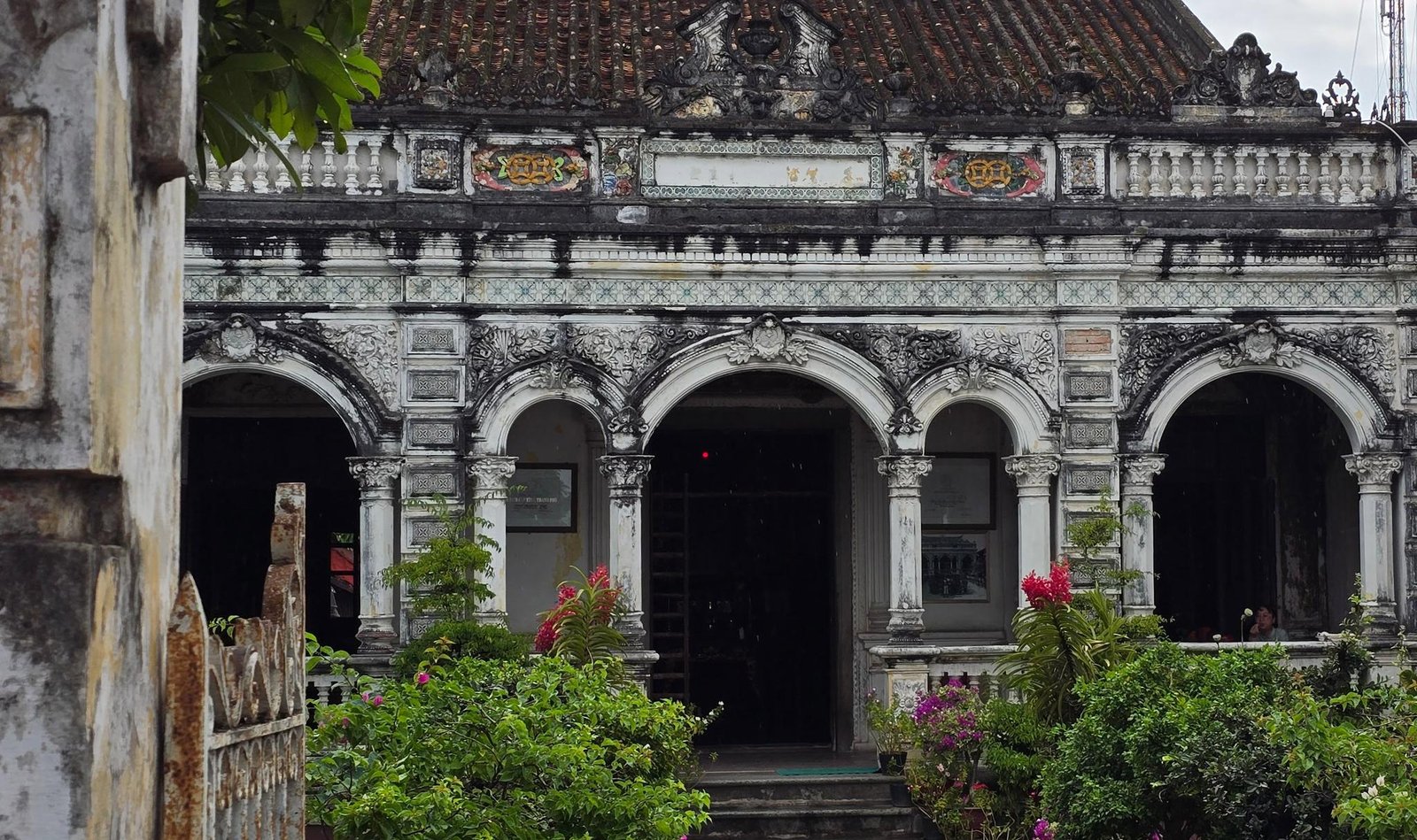
The former Sa Dec home of Huynh Thuy Le. Picture: Will Yeoman
Early in Marguerite Duras’ 1984 semi-autobiographical novel The Lover, there’s a beautiful description of the Mekong:
“My mother sometimes tells me that never in my whole life shall I ever again see rivers as beautiful and big and wild as these, the Mekong and its tributaries going down to the sea, the great regions of water soon to disappear into the caves of ocean. In the surrounding flatness stretching as far as the eye can see, the rivers flow as fast as if the earth sloped downward.”
The Viking Tonle holds me as we sail down the Mekong, towards the former Sa Dec home of Huynh Thuy Le — the lover in the story. And I’m already inclined to agree with Duras’ mother, even before our sampan arrives to carry us across this beautiful, big, wide expanse and down narrower backwaters of the Mekong Delta in Vietnam, first to Cai Be, then Sa Dec.
After disembarking in Cai Be, we walk the narrow road between the canal and the row of small shops and houses. Small animals and children play in yards or snooze in hammocks. Men pile up mud and other materials along the bank to help prevent flooding and erosion. Even here, we must make way for the occasional scooter and motorbike, the main mode of transportation in Vietnam. We pause to refresh at an orchard cafe. Fruits and flowers — jasmine, jackfruit — abound.