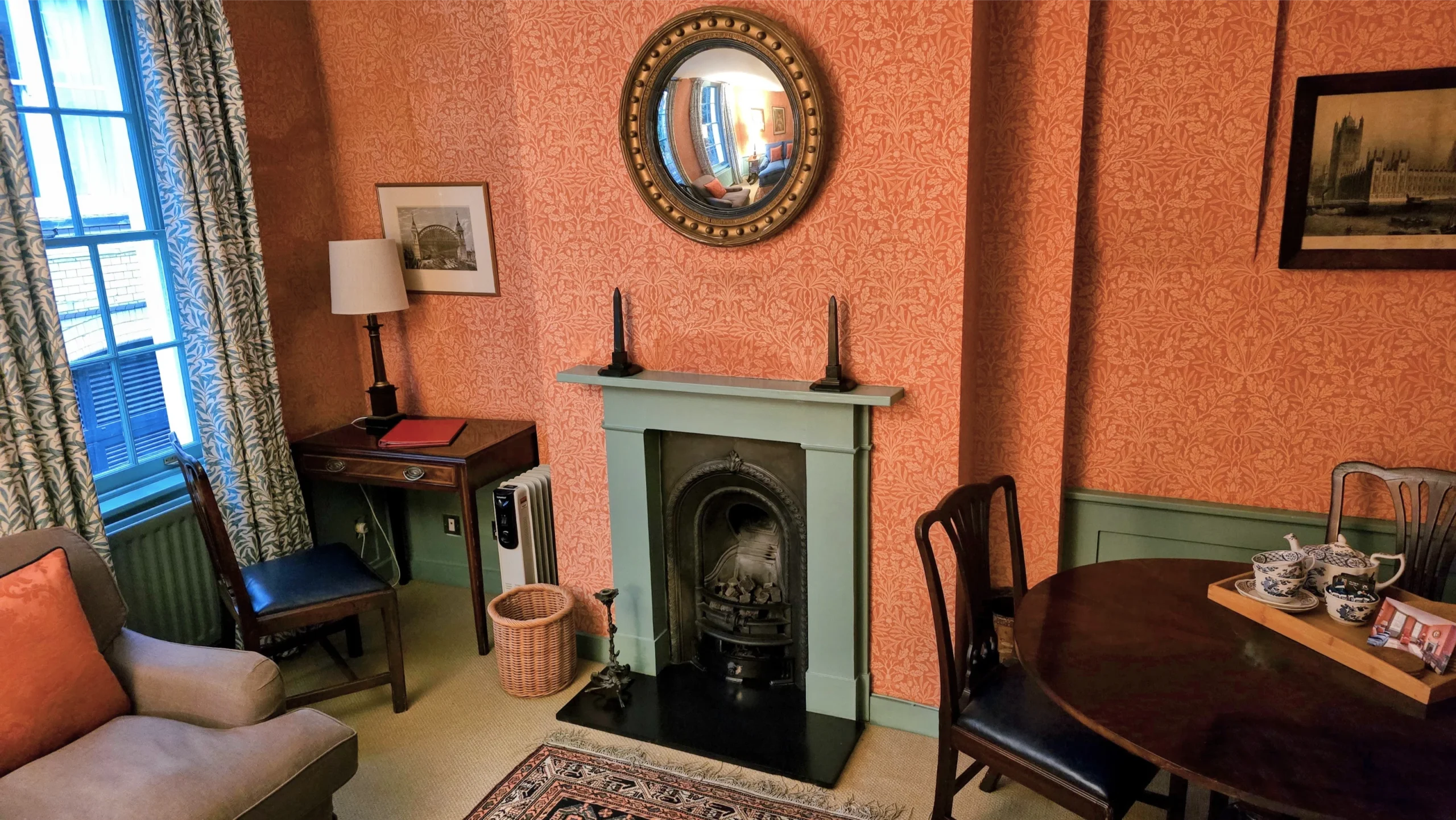
The sitting room in Betjeman’s Cloth Fair flat. Picture: Will Yeoman
Walking down Cloth Fair, a modest residential street in the City of London’s Smithfield, you’d be hard pressed to find evidence of the former bustling medieval cloth market of Bartholomew Fair, from which its name derives.
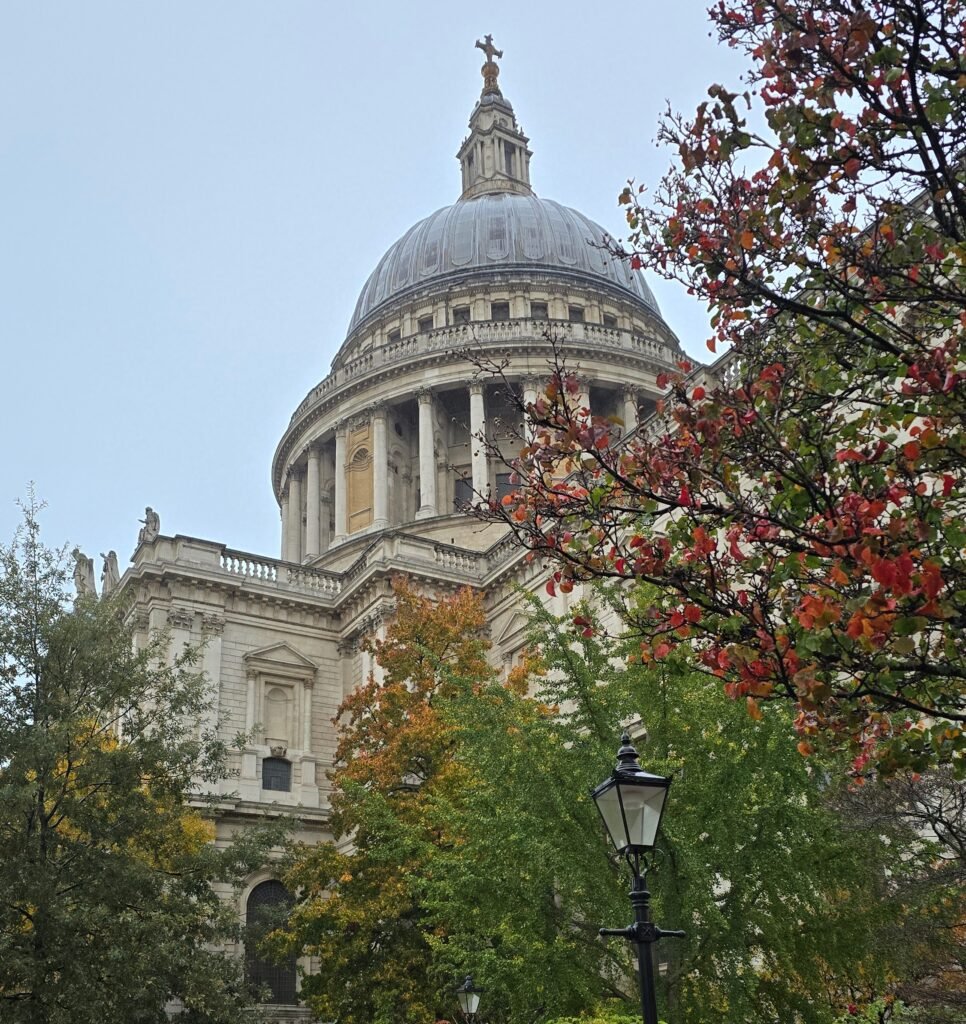
We have come here primarily to stay at former Poet Laureate Sir John Betjeman’s old digs, since 1984 a Landmark Trust property, and thus available for anyone to rent. Being within easy walking distance of St Paul’s Cathedral, the Barbican and other places of interest, it promised to be a comfortable and convenient base from which to explore further afield.
But who was Betjeman? He had a formidable reputation for being a witty versifier. And he was a tireless campaigner for the preservation of historic architecture. St Pancras station owes his survival to him, and there is a statue there commemorating both this achievement and celebrating his lifelong romance with rail travel.
One of my favourite Betjeman poems is A Mind’s Journey to Diss – which I consider poetical travel writing. Here is an excerpt:
“Above the chimney-pots we’ll go
Through Stepney, Stratford-atte-Bow
And out to where the Essex marsh
Is filled with houses new and harsh
Till, Witham pass’d, the landscape yields
On left and right to widening fields,
Flint church-towers sparkling in the light,
Black beams and weather-boarding white,
Cricket-bat willows silvery green
And elmy hills with brooks between,
Maltings and saltings, stack and quay
And, somewhere near, the grey North Sea.”
Betjeman lived at 43 Cloth Fair from the mid-1950s to the mid-1970s. The sitting room, bedroom, kitchen and bathroom feature original fittings and William Morris wallpaper. There is also a small library of books about the area, and about London more generally, as well as board games.
How easy it is to imagine him here, sitting on the couch by the fire, snug and warm, reading a volume of Pevsner’s The Buildings of England, the rain pelting down outside.
How easy it is for us to have a home-cooked meal and eat it at the small dining table before relaxing on that same couch, reading travel guides old and new as we plan the days ahead.
There is much to see and do.
The Georgian-era flat sits above a restaurant fittingly known as Cloth (a tad out of our price range). Next door is the City’s oldest surviving house, dating from the16th century. Though again, you wouldn’t realise it at first sight, so unprepossessing is its exterior.
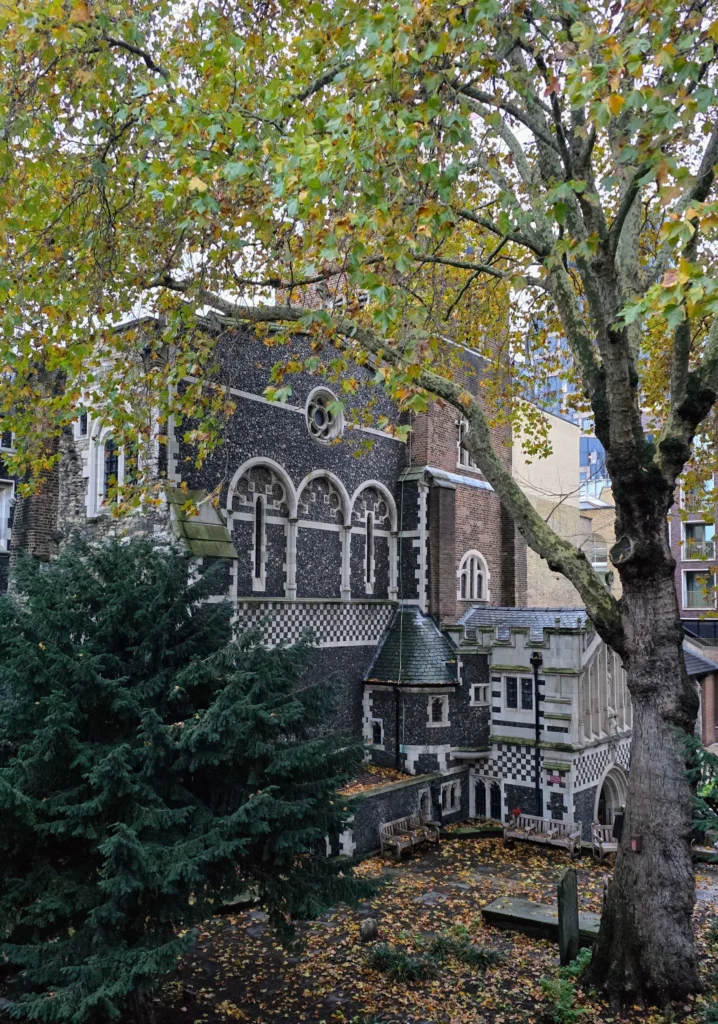
Across the road from the flat, and visible from the bedroom and sitting room windows of the flat, is the beautiful church of St Bartholomew-the-Great, a remnant of St Bartholomew’s Priory and a fine example of Norman architecture.
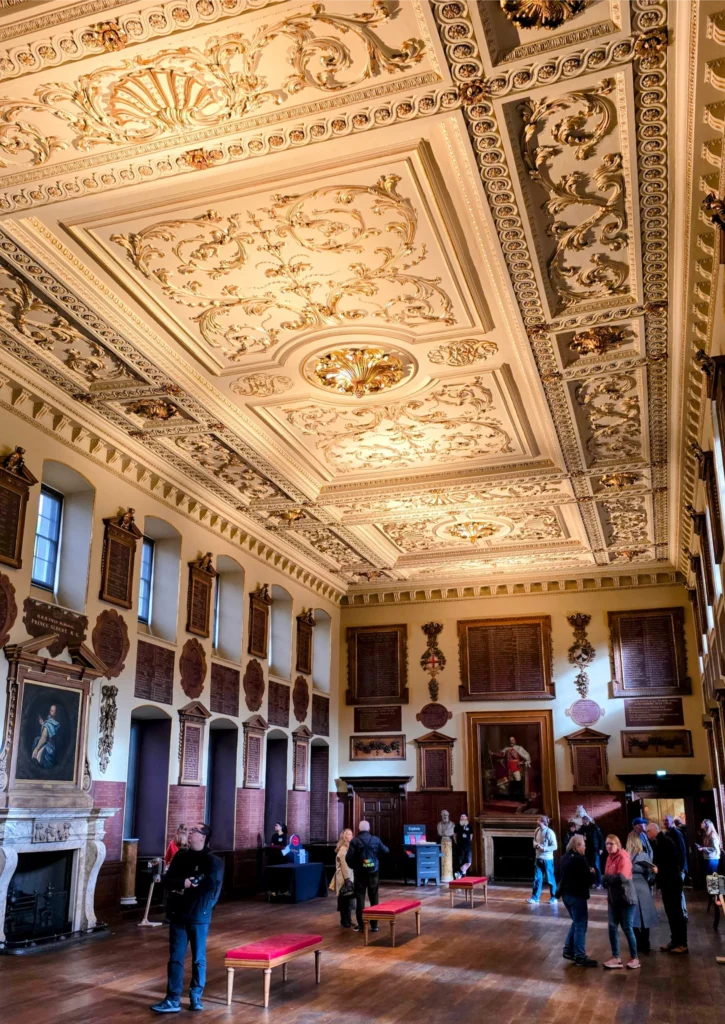
Nearby is St Bartholomew’s Hospital, the historic North Wing of which houses, amongst other things, a slightly macabre museum devoted to medical history, an imposing Great Hall and a staircase adorned with paintings by William Hogarth.
This part of an otherwise vast, modern hospital, is only open to the public Mondays, Tuesdays and the first Sunday of every month. Lucky for us, it’s one of those Sundays. We would have been sorry to miss such an experience.
Both the hospital and the Augustinian priory were founded in the 12th century by Rahere, one of Henry I’s courtiers. Legend has it that Rahere was inspired to do so after St Bartholomew appeared to him in a vision, commanding him to build on the “smooth field” aka Smithfield.
Rahere’s tomb is in the church. But so too, as we discover, are some very strange examples of contemporary art, including Damien Hirst’s Exquisite Pain, which portrays the flayed St Bartholomew holding his own skin – he had been martyred by being skinned alive.
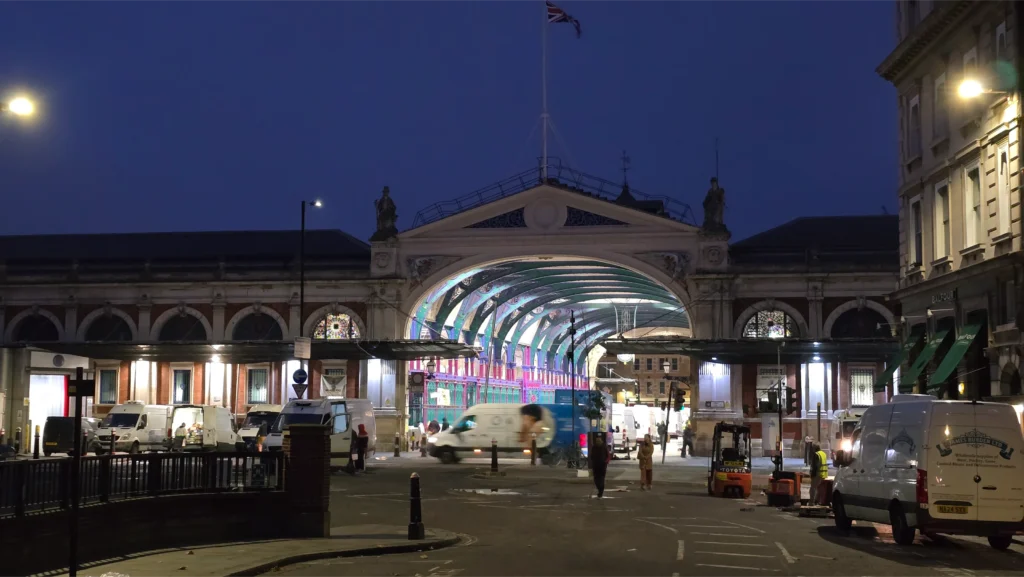
Smithfield is also remarkable for the historic Smithfield Market, a wholesale meat market dating from medieval times. Parts of it are currently being repurposed for the new London Museum, with the market relocating later this year and possibly closing by 2028.
Bartholomew Fair however met its demise much earlier, during the Victorian period, having evolved into something more akin to a scandalous carnival, with all manner of rowdy and lewd entertainments.
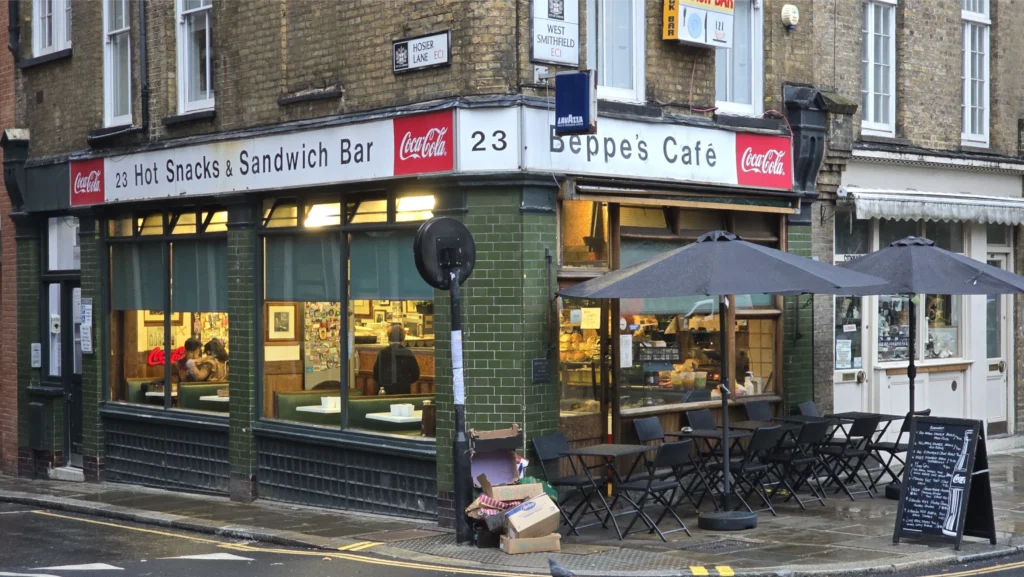
Our time at Cloth Fair drawing to and end, we are gifted a parting pleasure, finding Beppe’s Cafe, featured in the last season of TV’s Slow Horses, but 5 minutes’ walk from the flat. Of course we must breakfast there.
Classic London greasy spoon. Betjeman would have been delighted.
For more information on Barts’ historic North Wing, see bartsnorthwing.org.uk/visit
To find out about Cloth Fair and other Landmark Trust properties, see landmarktrust.org.uk