Arcangelo/Cohen
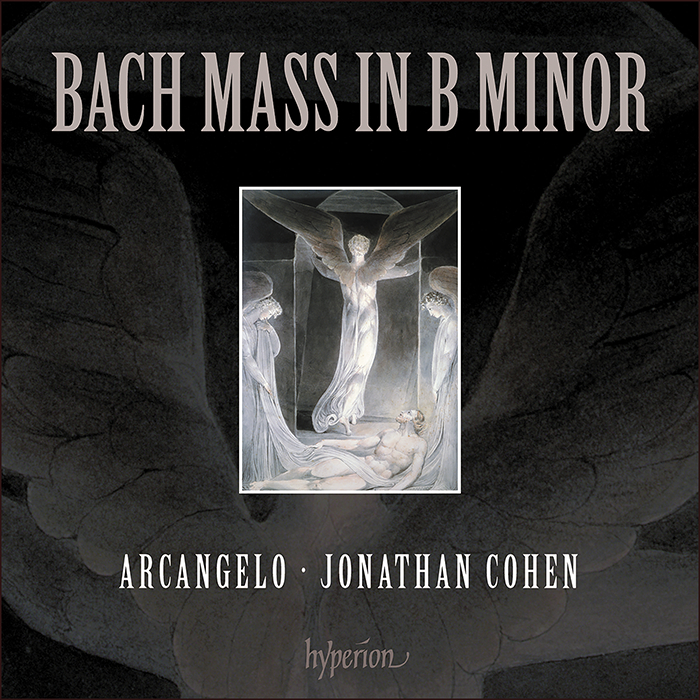
Hyperion CDA68051/2. Released October 2013
A cellist, keyboardist and keen chamber musician – he was one of the founding members of the London Hayden Quartet – Arcangelo’s director Jonathan Cohen is also associate conductor of Les Arts Florrisants. These facts in part explain the extraordinary sound-picture Cohen manages to conjure up in this new recording of one of the great choral masterpieces of the Baroque. This is a Mass in B minor where chamber-like sonorities go together with dramatic gestures as elegant as they are powerful, and where the instrumental and vocal soloists alike are allowed a high degree of latitude in expressing their individuality within the context of a highly disciplined vision of a highly variegated work.
By now the facts of the B minor Mass’s evolution are as well-established as the view that it was never intended to be performed in its entirety but rather, to quote from Richard Wigmore’s excellent booklet essay, “as an encyclopaedic conspectus of (Bach’s) art”. The Kyrie and Gloria – the latter reworking material from some of Bach’s cantatas – were written in 1733 in the hope of gaining a court title from Elector Friedrich August II of Saxony. The remaining sections of the Mass were also largely fashioned from pre-existing material only a year or so before Bach’s death in 1750.
Other recordings are of course legion, and in terms of an overall aesthetic this one probably comes closest to The Sixteen’s (Coro COR16044) in its balance of medium-sized forces, mixed voices and maximum clarity and expressivity, especially in the many fugal movements. From a catalogue point of view, it makes an attractive counterpoint to Hyperion’s beautiful all-male 1996 recording with the Tölzer Knabenchor and the King’s Consort under Robert King. As King writes in his essay for that recording (Hyperion CDD22051), “Whilst it is far harder work performing Bach’s Mass using children on choruses and solos than it is calling on experienced and technically more assured female adults, the sound of unbroken soprano voices and the astonishing timbre of boy altos is inimitable and, in the end, seems so utterly right for Bach’s music.”
Maybe so. But it’s not a case of either/or, and much of what Cohen achieves here also seems “so utterly right”. Like the striking contrast between the outer choral sections of the Kyrie – one a magnificent, brooding fugue delicately tinted by flutes and oboes, the other a spare, stile antico construction – and the dance-like Christe eleison, in which soprano soloists Lydia Teuscher and Ida Falk Winland evoke a galant operatic duet, fulsome of voice and with well-matched, medium vibratos.
Other soloistic highlights include Winland’s duet with leader Cecilia Bernardini’s violin in an exquisite Laudamus Te; Teuscher and tenor Samuel Boden with flautist Rachel Brown in the Domine Deus – Bach scores this for two flutes in unison but Brown’s fluid phrasing deserves the limelight; a richly rendered Quoniam tu solus sanctus with horn player Ursula Paludan Monberg horn and bass Neal Davies; and a heart-rending Agnus Dei featuring alto Tim Mead, who eloquently colours his pure, rock-steady tone with a sparing use of vibrato.
But the chief joy of this recording is the superlative choral and orchestral playing. Listen, for example, to the bright, punch Gloria with its resounding trumpets and timpani, which instruments are wielded with equal artistry in the thrilling climaxes of both the Gratias agimus tibi and final Dona nobis pacem. Or the fey Qui tollis peccata mundi with its delicate flutes, the mournful descending figures of the Et incarnatus est and Crucifixus etiam pro nobis, all of which Cohen paints in muted colours, the singers and instrumentalists alike his willing co-conspirators in beguiling the listener’s ears and heart utterly. Or the gradations of tone, timbre and tempo in the Confiteor unum baptisma, which is here sung one-to-a-part. Or the stately, dignified magnificence of the Sanctus’s opening and its attendant triple-time fugue, both executed with the same discerning intelligence and flair which characterise this recording as a whole.